It Was Supposed to Be One Screen
ORIGINAL SCOPE: ██████████ LONG GONE
The folder on my hard drive is called loot_route. The Visual Studio solution inside it is called gobs&gears.sln. Every single source file in the project is prefixed lr_.
That folder name is a relic, and the code prefix is the last surviving piece of what this game was supposed to be.
Loot Route was a single-screen incremental.
That was the whole pitch, and I still think it was a decent one. Loot spawns inside a random building. You build the route where the loot is supposed to go. You get paid. You spend it to make the route better. Numbers go up. The entire game fits on one screen with no camera, because there is nothing off-screen to look at. Small, tight, finishable. The kind of thing one person can actually ship.
Here is what is in the repo today.
Twenty-seven building types. Nineteen resource types. A 96×96 tilemap. A procedurally generated world built on seeded Perlin noise and fractal Brownian motion, revealed through fog of war by scout towers, in 2,621 lines of world generation code. A Gob King with twelve moods and a procedural voice system stitched from 104 recorded clips. A musical score in five phase-locked layers that fades in as you progress. Tens of thousands of lines of code.
None of that was in the plan. There was no meeting where I decided to pivot.
What actually happens is much dumber and much more interesting.
Initially, setting up the routes was fun. Loot would spawn and travel to its destination if it could. Loot was smart. Setting up proper routes was trivial and fun. Numbers would go up. You'd spend coins to make things faster, get more loot, get more delivery destinations, and keep hooking up new routes. After twenty minutes it was boring. You didn't have to do anything anymore. Watching things move around wasn't enough. I wanted more.
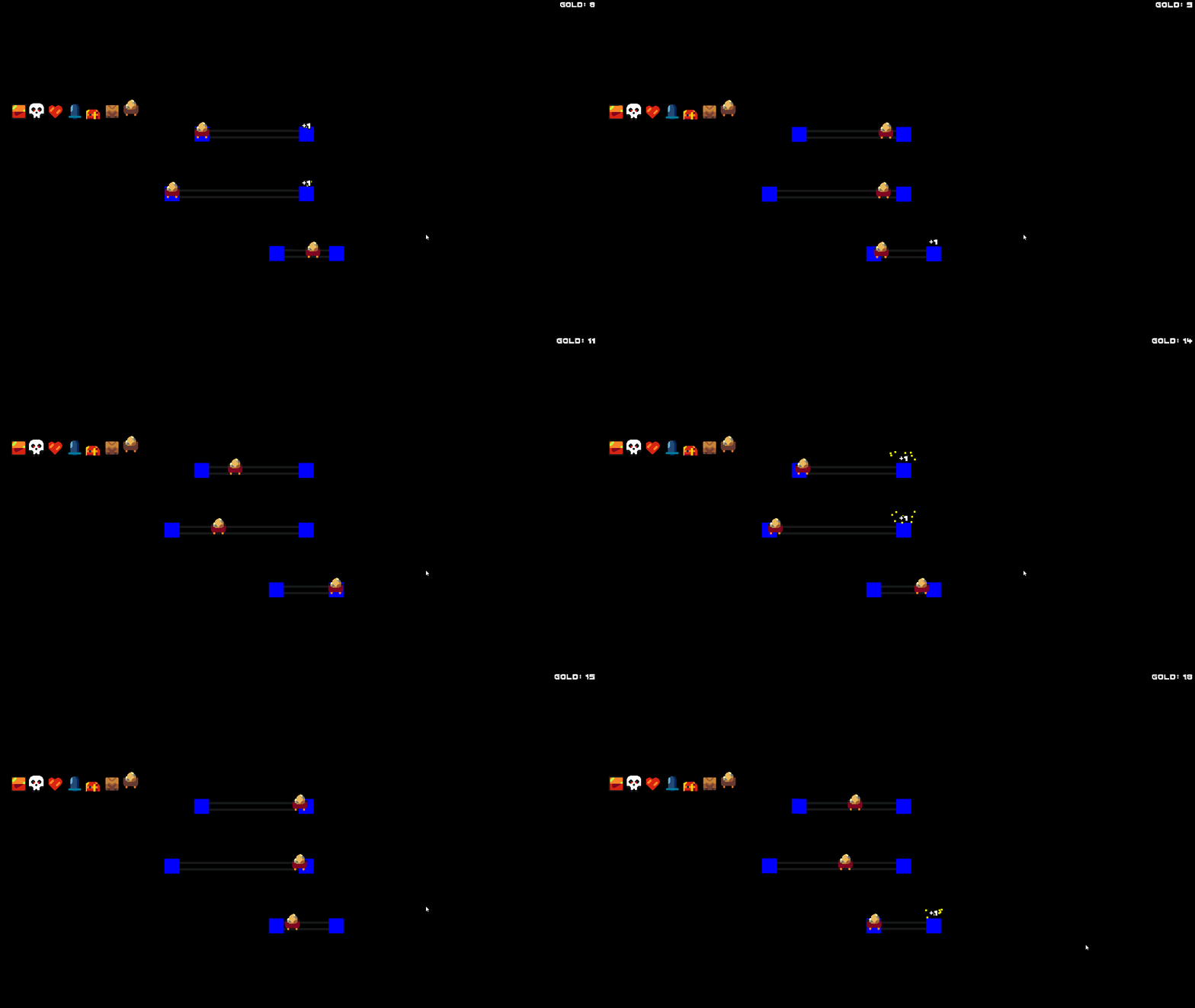
My first idea was to randomize the destinations on the map. Each map had a different setup and required different routes. I thought this would make it more interesting, but it didn't.
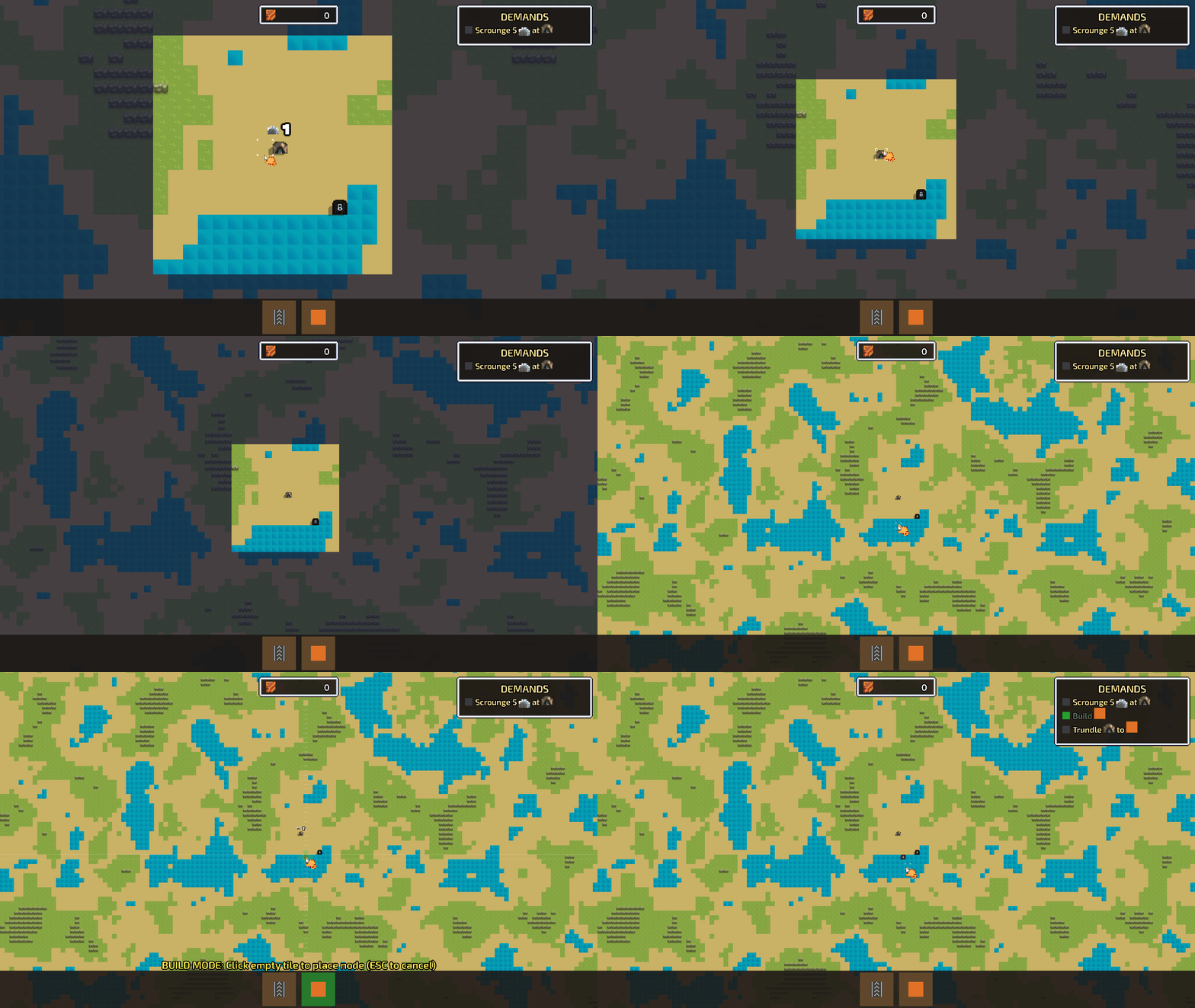
My next idea was to start adding random terrain like water or mountain tiles that you have to route around. I don't think anyone adds a procedural world generator to an incremental game on purpose. You keep adding things to the map generation and eventually you have one. The map generator makes a big world, and a big world you can see all of at once is not a discovery, so you cover it in fog. Now the player needs a way to lift the fog, so you build a scout tower. The scout tower is a building, and buildings should have a reason to be somewhere, so terrain starts to matter.
Same story on the other side. Numbers going up is a mechanic, not a reason. So you ask why the loot matters, and the answer turns out to be a goblin king who wants an extremely large bomb, and now the king needs a face, and a face with no expression is creepy, so he gets twelve, and a face that moves with no sound is worse, so he gets a voice.
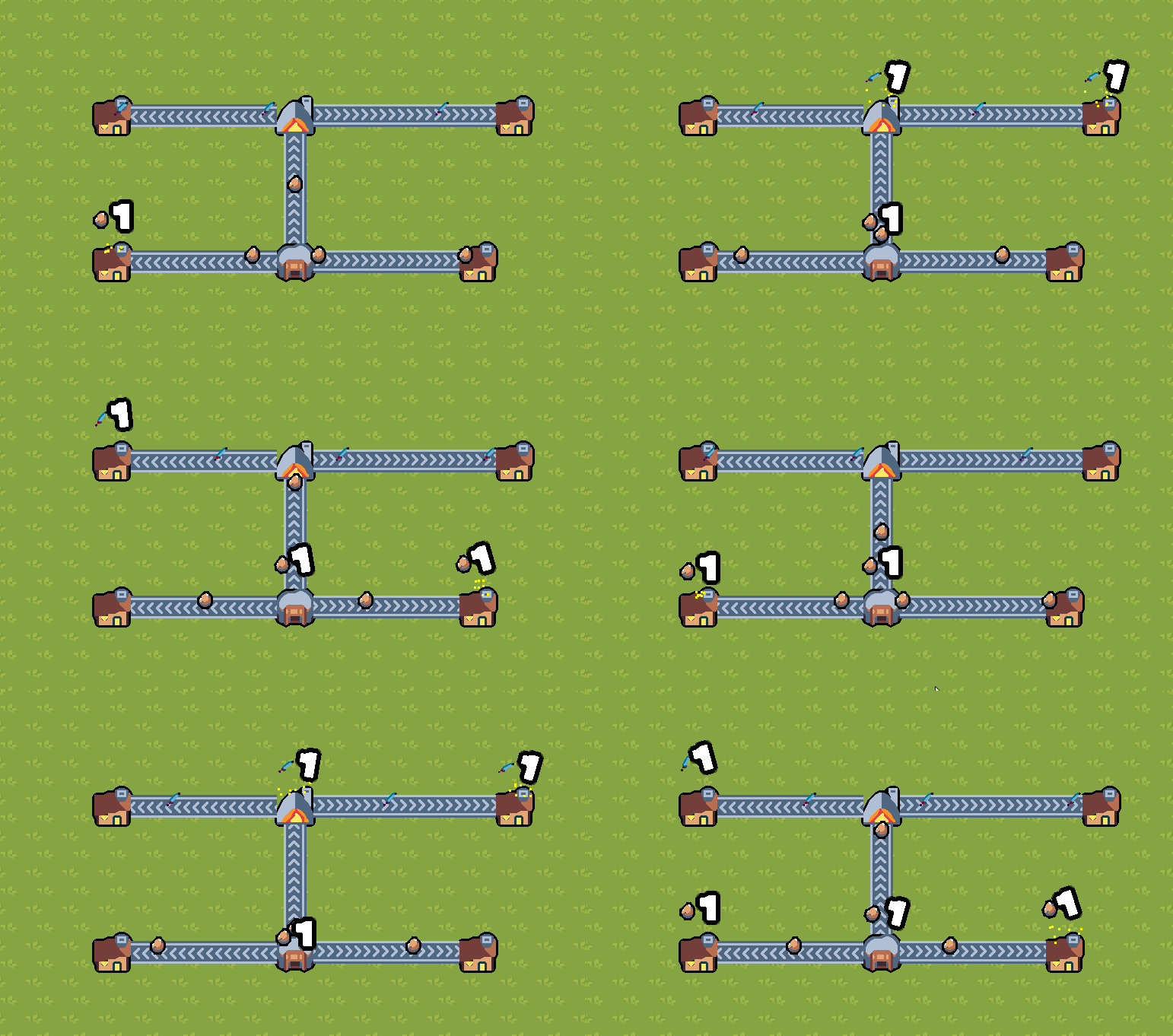
Two buildings and a belt between them. Then belts that cross other belts, so junctions. Then filters on the junctions, so the belt network has opinions. Every one of those was an afternoon that made the game better, and the sum of them is a genre I did not set out to work in.
Okay, I get it. This post is sounding like a goblin justifying his scope creep. But I think what matters here is where the pressure to change the idea came from.
Scope creep is adding things because you are frightened the game is not enough. More content. More systems. A crafting layer because every game has one. It comes from outside, from comparison, from a vague sense that the thing you have is too small to be taken seriously.
What happened to this game came from inside it. Every addition was the game telling me what it needed next, usually by being slightly unsatisfying in a specific way. The map was boring, so it got a generator. The loot had no stakes, so it got a king. I was not adding features. I was following the complaints I had about the game myself. I don't play factory games. I find them too hard, too overwhelming, and they feel like work. I tried to make a factory game for me.
Here is the part I actually want to argue about. If I had been chasing a genre, I don't think any of this would have survived.
To chase a trend you have to arrive while it is still a trend. That means shipping fast. I am one person doing this on nights and weekends on top of an engine I wrote myself. Whatever is hot today will be thoroughly finished by the time I could get anything out of the door in response to it. If I picked my genre by what is selling right now, I would spend years building the thing everybody was tired of eighteen months ago, and I would spend those years working on something I chose out of calculation rather than interest.
There is a very specific kind of misery in being two years into a project you picked strategically and no longer believe in. You cannot grind through that on nights and weekends. There is no salary making it worth the Tuesday night alone in the basement. The only projects that survive a solo multi-year timeline are the ones where the work itself is the payment.
So the calculated choice and the honest choice collapse into the same answer, which is convenient, and which I would like to claim as strategy rather than luck.
The cost is real though, and it is mostly mine to eat.
"Single-screen incremental" is a pitch. You say it and the other person immediately knows the shape of the thing, roughly what it costs, and whether they want it. Four words and you are done.
What I have now takes a paragraph. It is a factory builder, but it is also about routing and pressure, and there is a procedurally generated map you uncover, and a king with moods who wants a bomb, and the whole run builds to one enormous explosion. I am proud of this thing that I built even though it makes the store page harder to write.
By letting the game become what it wanted, I made my own marketing job significantly worse. I can see that now.
I'll do it again. Time and time again. A game that is hard to describe and good is a better problem than a game that is easy to describe and forgettable. One of those has a chance of somebody loving it.

There is one last thing that made all of this possible, and it is the reason I bang on about owning your tools.
Gobs & Gears came together incredibly quick. I started in January 2026 and I intend to ship it this year.
The mountain is what let the game wander. That is the actual return on seven years.
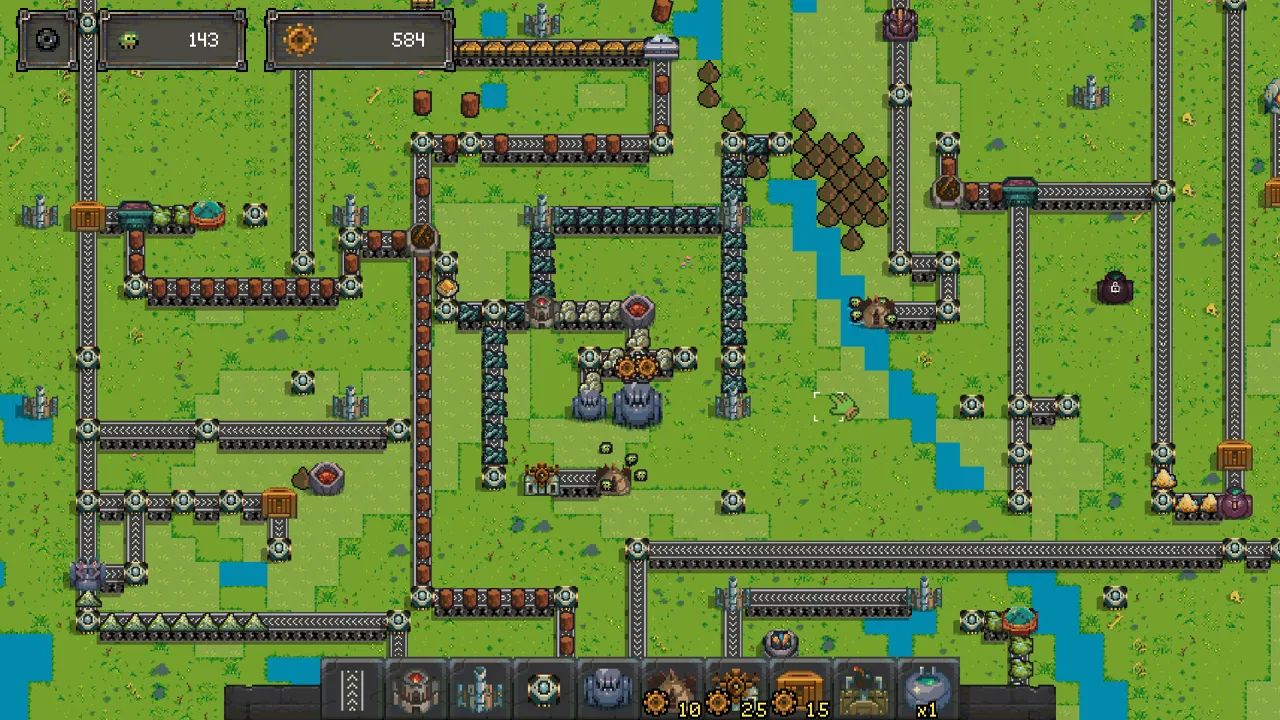
lr_ prefix.Wishlist Gobs & Gears and sign up for dispatches from this Goblin. Next Dispatch Day is Monday.
GOBLINTEK is a one-person game studio. We own our shit.